Start Your Business with Confidence
From company incorporation to ongoing company secretarial services, SASCO helps Malaysian SMEs understand their compliance requirements with practical, straightforward advice.
Contact Us WhatsApp Us
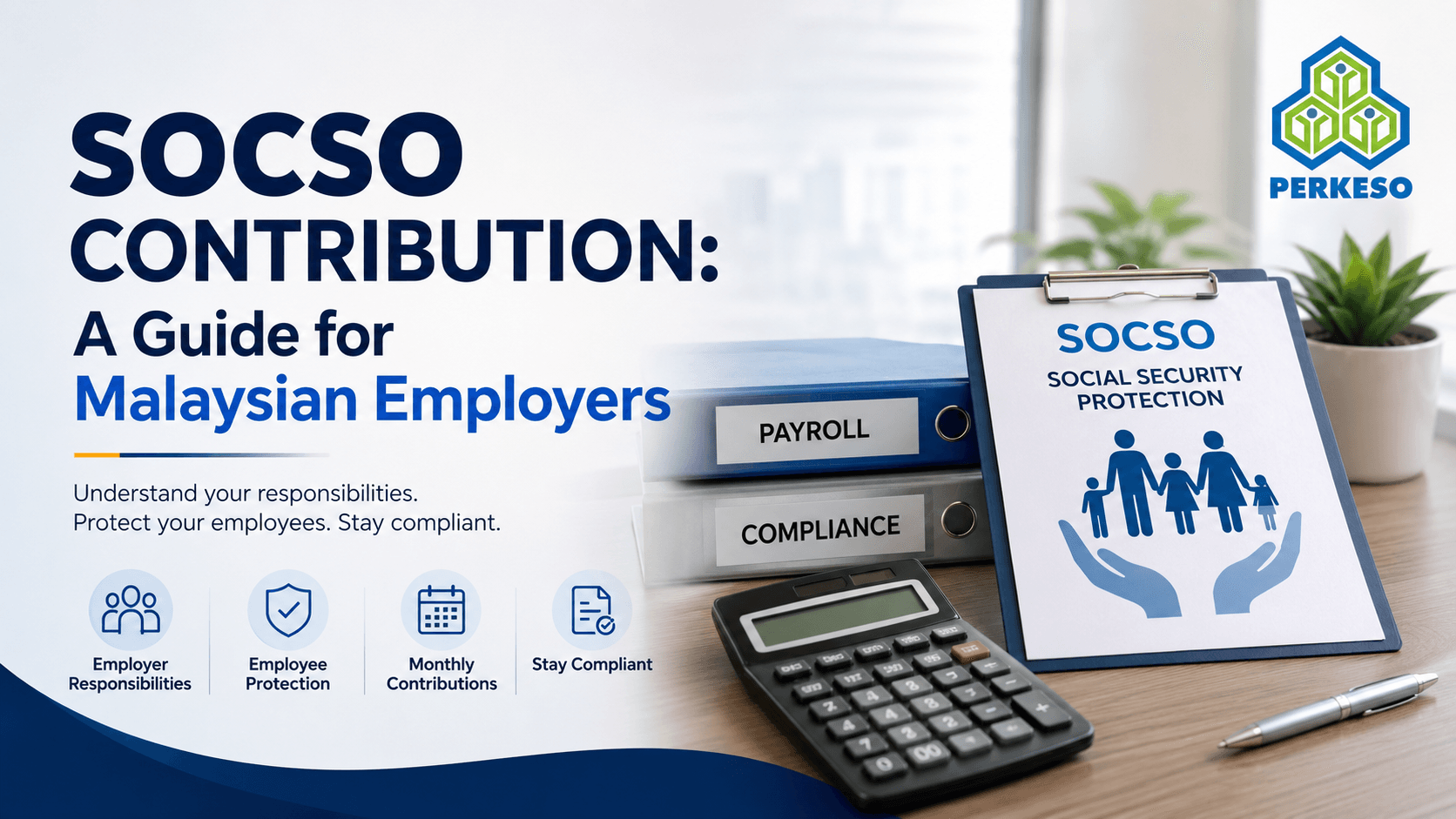
SOCSO Contribution Guide: What Malaysian Employers Need to Know
If you’re hiring employees in Malaysia, SOCSO is one of the mandatory employer obligations you need to understand alongside EPF (KWSP), HRD Corp, tax deductions, and other payroll requirements.
For many SME owners, payroll compliance can feel overwhelming—especially when you’re already managing operations, sales, and business growth. Missing a required contribution or misunderstanding employee coverage can lead to unnecessary compliance issues and administrative headaches.
The good news is that SOCSO contributions are relatively straightforward once you understand who needs to contribute, how contributions work, and your responsibilities as an employer.
This SOCSO contribution guide explains the basics of SOCSO, what employers should know, and how proper payroll management can help keep your business compliant.
What Is SOCSO?
SOCSO stands for the Social Security Organisation, also known as PERKESO.
Its role is to provide social security protection for eligible employees in Malaysia. Through employer and employee contributions, SOCSO provides financial assistance and benefits to workers in the event of workplace accidents, occupational diseases, disability, or certain employment-related situations.
Overall, for employers, contributing to SOCSO is part of fulfilling your statutory employment obligations.
Why Is SOCSO Important?
SOCSO helps provide financial protection for employees when unexpected situations occur, including:
- Workplace injuries
- Occupational diseases
- Permanent disability
- Temporary disability
- Invalidity
- Survivors’ benefits (subject to eligibility)
- Medical and rehabilitation assistance
In addition, while employees benefit from this protection, employers also benefit by meeting legal employment requirements and reducing compliance risks.
Who Needs to Register for SOCSO?
Generally, employers hiring eligible employees in Malaysia are required to register with SOCSO and make monthly contributions.
This applies to many businesses, including:
- Sole proprietorships with employees
- Partnerships
- Sdn Bhd companies
- LLPs
- Professional firms
- Retail businesses
- Manufacturing companies
- Service businesses
If you’re hiring staff for the first time, registering for SOCSO should be part of your onboarding process together with EPF registration, payroll setup, and tax-related obligations.
Note: Eligibility rules, contribution requirements, and exemptions may change over time. please verify the latest requirements directly with PERKESO before making business decisions.
How Do SOCSO Contributions Work?
SOCSO contributions are usually made every month.
Both the employer and employee contribute based on the employee’s monthly wages, according to the official contribution schedule issued by PERKESO.
The general process is straightforward:
1. Register as an Employer
Businesses register with PERKESO after employing eligible workers.
2. Register Employees
Eligible employees should be registered under the employer’s SOCSO account.
3. Calculate Monthly Contributions
Contribution amounts depend on:
- Employee monthly wages
- Applicable contribution category
- Official PERKESO contribution table
Refer to the official PERKESO contribution table for the current rates that apply to your business.
4. Submit Monthly Contributions
Employers are responsible for submitting contributions within the official deadline each month.
Check the PERKESO portal for the exact submission deadline that applies to your contribution cycle.
5. Keep Proper Records
Employers should retain payroll records and supporting documents as part of good compliance practice.
What Is Included in SOCSO Coverage?
Depending on the applicable scheme and employee eligibility, SOCSO may provide benefits such as:
- Medical benefits
- Temporary disablement benefits
- Permanent disablement benefits
- Dependants’ benefits
- Funeral benefits
- Rehabilitation services
- Invalidity benefits
The exact coverage depends on the employee’s circumstances and the applicable PERKESO scheme.
How Is SOCSO Different from EPF and HRD Corp?
Many new employers confuse these three statutory obligations.
| Organisation | Main Purpose |
|---|---|
| SOCSO (PERKESO) | Social security protection for employees |
| EPF (KWSP) | Retirement savings for employees |
| HRD Corp | Employer levy used for employee training and development (for eligible employers) |
However, although all three involve employer contributions, they serve different purposes and have separate registration and compliance requirements.
Common Mistakes Employers Make
Many compliance issues happen because businesses are unfamiliar with payroll obligations rather than intentionally avoiding them.
Common mistakes include:
Delaying Employer Registration
Some businesses only register after hiring several employees, creating unnecessary compliance issues.
Forgetting to Register New Employees
New hires should be registered promptly where applicable.
Incorrect Payroll Information
Errors in employee wages may result in incorrect contribution calculations.
Missing Monthly Deadlines
Late submissions can create administrative complications.
Poor Record Keeping
Missing payroll records can make future verification more difficult.
What Happens If Employers Do Not Comply?
Failing to meet SOCSO obligations may expose businesses to compliance risks, including:
- Late contribution issues
- Administrative penalties
- Difficulties during payroll reviews
- Employee benefit complications
- Additional administrative work to correct previous records
Employers should always verify the latest compliance requirements directly with PERKESO.
Best Practices for SMEs
Good payroll compliance starts with having clear processes.
Consider these practices:
- Register statutory accounts before hiring employees.
- Keep employee information updated.
- Review payroll calculations regularly.
- Submit contributions on time.
- Maintain organised payroll records.
- Monitor updates to statutory contribution requirements.
As a result, businesses that maintain consistent payroll processes often spend less time correcting compliance issues later.
How SASCO Can Help
Managing payroll compliance involves more than calculating salaries. Employers also need to keep track of statutory obligations such as SOCSO, EPF, tax deductions, HRD Corp requirements, and payroll reporting.
SASCO supports Malaysian SMEs with practical compliance solutions, including:
- Payroll administration support
- Accounting and bookkeeping support
- Accounting and bookkeeping services
- Business compliance guidance
- Ongoing support for statutory employer obligations
Whether you’re hiring your first employee or managing a growing workforce, having experienced compliance support can help reduce administrative burden while keeping your business organised.
Speak with SASCO to learn how our accounting and payroll compliance support can help keep your statutory obligations organised.
Frequently Asked Questions (FAQ)
Is SOCSO mandatory for employers in Malaysia?
In general, employers with eligible employees are required to register and make SOCSO contributions. Eligibility requirements may vary, so employers should verify the latest rules with PERKESO.
How is SOCSO contribution calculated?
SOCSO contributions are calculated based on the employee’s monthly wages using the official PERKESO contribution schedule.
Employers should refer to the official PERKESO contribution table for the exact figures.
Is SOCSO the same as EPF?
No. SOCSO provides social security protection for employees, while EPF focuses on retirement savings. Employers are generally responsible for complying with both requirements where applicable.
When should employers pay SOCSO contributions?
SOCSO contributions are generally submitted monthly.
Check the PERKESO portal for the exact payment deadline each month.
Conclusion
This SOCSO contribution guide has covered the essentials: understanding SOCSO is an important part of running a compliant business in Malaysia. While the process is relatively straightforward, employers should ensure they register eligible employees, calculate contributions correctly, submit payments on time, and maintain proper payroll records.
Therefore, as your business grows, managing statutory obligations alongside payroll and accounting compliance becomes increasingly important. Working with experienced compliance professionals can help streamline these responsibilities so you can focus on running your business with greater confidence.
Further reading: EPF Employer Registration Guide (KWSP Majikan) and HRDF Contribution: What Employers Need to Know. For official reference, see PERKESO (SOCSO).
Apa Kata Pelanggan Kami
Rating 5.0 daripada 29 ulasan Google

I really appreciate the continuous support, clear guidance, and helpful advice given throughout the process. It has been a smooth and pleasant experience dealing with such a dedicated and committed team.
Thank you once again for all the support and outstanding service. Keep up the great work!
Want a quick estimate? Try our free EPF & SOCSO Salary Calculator.