Start Your Business with Confidence
From company incorporation to ongoing company secretarial services, SASCO helps Malaysian SMEs understand their compliance requirements with practical, straightforward advice.
Contact Us WhatsApp Us
Understanding KWSP Majikan and Your Employer Responsibilities
If you’re hiring employees in Malaysia, registering as a KWSP majikan (EPF employer) is one of the first compliance steps you need to complete. Alongside tax obligations, SOCSO, and HRDF requirements, EPF registration helps ensure your employees receive retirement savings contributions as required.
Many SME owners are comfortable managing sales and operations but feel uncertain about employment-related compliance. Questions such as “When should I register?”, “Who needs EPF?”, and “How do monthly contributions work?” are common, especially for new businesses.
This guide explains the basics of KWSP majikan, how employer registration works, your ongoing responsibilities, and common mistakes to avoid.
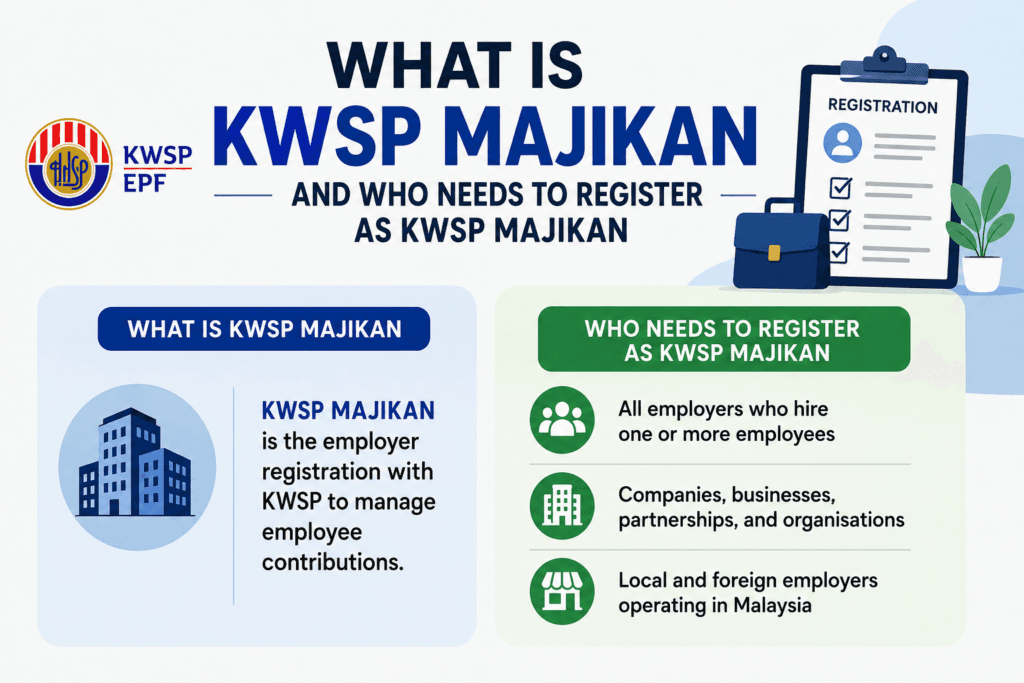
What Is KWSP Majikan?
KWSP stands for Kumpulan Wang Simpanan Pekerja, also known as the Employees Provident Fund (EPF).
A KWSP majikan is any employer that registers with EPF and is responsible for:
- Registering eligible employees
- Making employer EPF contributions
- Deducting employee EPF contributions from salaries where applicable
- Submitting monthly contribution payments
- Maintaining accurate payroll records
For most businesses, EPF forms part of the standard employment compliance process alongside:
- Income tax deductions (PCB/MTD where applicable)
- SOCSO (PERKESO)
- EIS
- HRDF (if applicable to the business)
As a result, managing these obligations together helps businesses stay organised and reduces compliance risks.
Who Needs to Register as a KWSP Majikan?
Generally, employers hiring employees in Malaysia should determine whether they are required to register with EPF.
This applies to many types of businesses, including:
- Sole proprietorships with employees
- Partnerships
- Sdn Bhd companies
- LLPs
- Professional firms
- Startups
- Retail and service businesses
If you are employing staff for the first time, EPF registration should usually be considered as part of your employee onboarding process.
Important: Eligibility requirements and exemptions may change over time. Always verify the latest requirements directly with KWSP before making decisions.
When Should an Employer Register?
Ideally, employer registration should be completed before or as soon as you begin employing eligible workers.
Waiting until several months after hiring employees can create unnecessary administrative work, including:
- Backdated payroll adjustments
- Late contribution issues
- Record reconciliation
- Additional communication with government agencies
Overall, registering early makes payroll administration much smoother from the beginning.
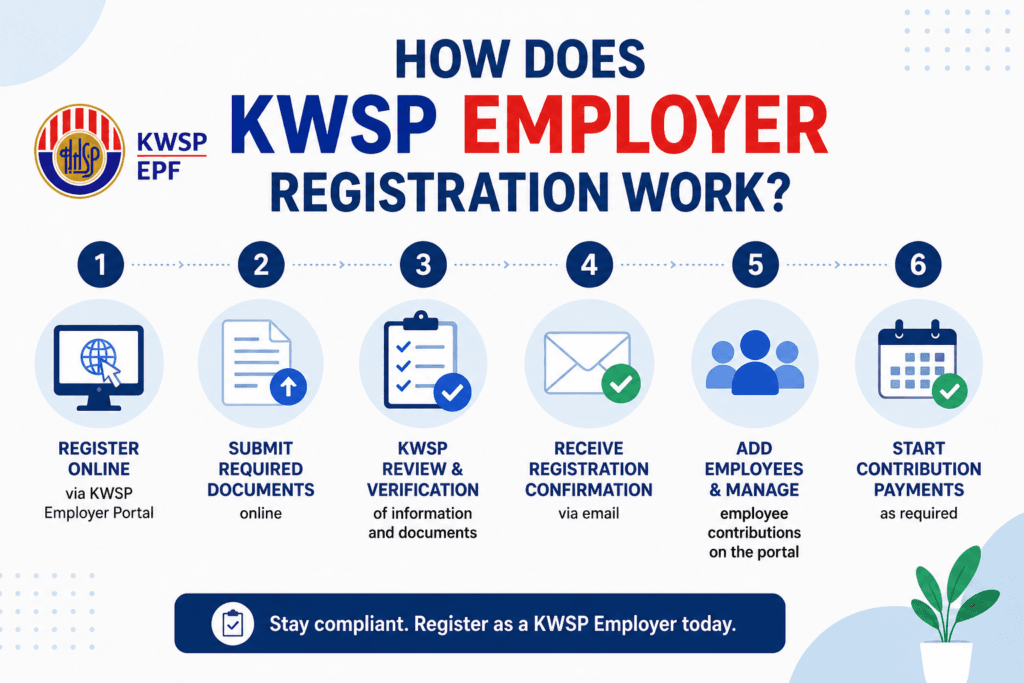
How Does KWSP Employer Registration Work?
Although the exact process may change over time, the typical registration journey includes the following steps.
1. Register Your Business as an Employer
The employer submits the necessary business information to KWSP.
This generally includes business registration details and supporting documents.
2. Receive Employer Registration Details
Once approved, the employer receives an employer reference that will be used for future EPF transactions.
Keep these records securely, as they will be required for ongoing payroll administration.
3. Register Eligible Employees
After becoming a registered employer, eligible employees should also be properly recorded under the employer’s account.
For new hires, this should become part of your standard HR onboarding checklist.
4. Calculate Monthly Contributions
Each payroll cycle, employers calculate:
- Employer contribution
- Employee contribution
- Total EPF payable
Contribution amounts depend on current EPF contribution rates and employee circumstances.
5. Submit Monthly Contributions
Monthly EPF contributions should be submitted according to the official deadlines.
Late payments may result in additional charges or administrative complications.
What Records Should Employers Keep?
Good recordkeeping makes compliance much easier.
Consider maintaining:
- Employee information
- Employment contracts
- Payroll reports
- Salary records
- Contribution calculations
- Payment confirmations
- Monthly payroll summaries
In short, accurate records are useful if questions arise during internal reviews or compliance checks.
Common Mistakes Employers Make
Many compliance issues happen because of administrative oversights rather than intentional mistakes.
Some common examples include:
Delaying Employer Registration
Some businesses wait until they have several employees before registering.
As a result, this may complicate payroll administration later.
Incorrect Payroll Calculations
Manual payroll calculations increase the chance of errors, especially when contribution rates change.
Always verify the latest official contribution rates.
Missing Monthly Deadlines
Late submissions can lead to avoidable compliance issues.
Using payroll reminders or accounting software can help keep payments on schedule.
Poor Employee Records
Missing or outdated employee information makes payroll processing more difficult and increases the time needed to resolve discrepancies.
Why Payroll Compliance Matters for SMEs
Payroll compliance is more than simply paying salaries.
Indeed, it demonstrates that the business has structured internal processes and meets its employer responsibilities.
Good payroll management also helps:
- Build employee trust
- Improve financial planning
- Reduce administrative stress
- Prepare the business for future growth
- Support smoother audits and compliance reviews
As a business expands, payroll becomes increasingly interconnected with accounting, tax reporting, and statutory compliance.
How SASCO Can Support Your Business
Managing payroll obligations can become challenging as your workforce grows.
While EPF registration is only one part of employer compliance, businesses also need to manage accounting, tax reporting, SST obligations (where applicable), payroll records, and other statutory requirements.
SASCO works with Malaysian SMEs to simplify compliance through practical, business-friendly support. Whether you are setting up your payroll processes, maintaining accurate financial records, or managing your ongoing tax and compliance responsibilities, our team helps you stay organised and informed.
If you’re looking for guidance on accounting, payroll-related compliance, or Tax & SST Compliance services, SASCO can help you understand your obligations and support your business as it grows.
Frequently Asked Questions
Is KWSP employer registration compulsory?
Many employers hiring eligible employees in Malaysia are required to register with KWSP. Requirements may vary depending on the employment situation, so always verify the latest guidelines with KWSP.
Can I register for KWSP online?
KWSP provides online services for employers. The registration process and required documents may change over time, so check the latest procedures through the official KWSP channels.
How often do employers pay EPF contributions?
EPF contributions are generally made on a monthly basis.
Does every employee need EPF contributions?
Contribution requirements depend on the employee’s eligibility under current EPF rules.
Always confirm the latest eligibility requirements and contribution rates with KWSP before processing payroll.
Final Thoughts
In short, understanding KWSP majikan responsibilities is an important step for every employer in Malaysia. Registering early, maintaining accurate payroll records, and submitting contributions on time can help your business build stronger compliance processes and avoid unnecessary administrative issues.
As your business grows, integrating payroll with proper accounting and tax compliance becomes even more important. Working with experienced compliance professionals can help SMEs manage these responsibilities more efficiently while staying focused on running the business.
Further reading: Panduan Pendaftaran KWSP Majikan and SOCSO Contribution: A Guide for Malaysian Employers. For official reference, see Kumpulan Wang Simpanan Pekerja (KWSP).
Apa Kata Pelanggan Kami
Rating 5.0 daripada 29 ulasan Google

I really appreciate the continuous support, clear guidance, and helpful advice given throughout the process. It has been a smooth and pleasant experience dealing with such a dedicated and committed team.
Thank you once again for all the support and outstanding service. Keep up the great work!