Start Your Business with Confidence
From company incorporation to ongoing company secretarial services, SASCO helps Malaysian SMEs understand their compliance requirements with practical, straightforward advice.
Contact Us WhatsApp UsWhat Is e-Invoice in Malaysia? Full Guide for Businesses
As digital tax reporting becomes more common, many Malaysian business owners are asking the same question: what is e invoicing, and how does it affect my business?
For many SMEs, e-Invoice is more than just another administrative change. It affects how invoices are created, validated, stored, and reported. If you’re unsure about what needs to be done or worried about compliance, you’re not alone.
The good news is that understanding e-Invoice doesn’t have to be complicated. With the right preparation and proper accounting processes, businesses can adapt smoothly while reducing compliance risks.
In this guide, we’ll explain what e-Invoice means in Malaysia, how it works, who needs to comply, and how your business can prepare.
What Is e Invoicing?
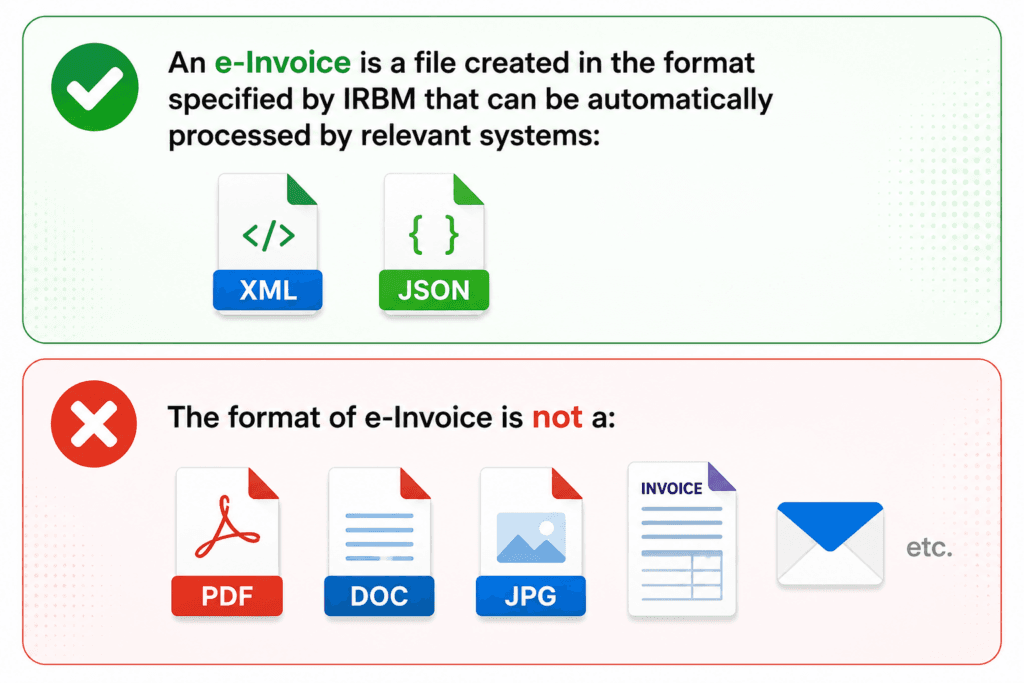
An e-Invoice (electronic invoice) is a digital invoice that follows a standard format and is validated electronically through the Inland Revenue Board of Malaysia (LHDN) system before it is recognised as an official tax invoice.
Unlike a traditional PDF invoice or paper invoice sent by email, an e-Invoice contains structured data that allows tax authorities to verify transaction details electronically.
In simple terms, an e-Invoice is:
- Created digitally
- Submitted for validation through the LHDN platform
- Assigned a unique validation reference
- Shared with customers as an official validated invoice
The objective is to improve tax reporting accuracy, reduce manual errors, and support a more transparent business environment.
Note: Implementation timelines and compliance requirements may differ depending on business size and annual turnover.
Why Is e-Invoice Important for Malaysian SMEs?
Many SMEs assume e-Invoice only affects large corporations. In reality, the implementation is being rolled out to businesses in stages, meaning more SMEs will eventually be required to comply.
Preparing early offers several advantages:
- Better record keeping
- More organised accounting processes
- Reduced manual paperwork
- Easier reconciliation between sales and accounting records
- Improved readiness for future tax compliance requirements
Instead of waiting until the last minute, businesses that prepare early often experience a smoother transition.
How Does e-Invoice Work?
Although the exact workflow depends on your accounting software or business process, the general flow looks like this.
1. Create an Invoice
Your business prepares an invoice after selling goods or providing services.
The invoice includes details such as:
- Seller information
- Buyer information
- Invoice number
- Products or services
- Quantity
- Price
- Tax information (where applicable)
2. Submit the Invoice to LHDN
The invoice data is submitted electronically through the approved e-Invoice platform or integrated accounting system.
3. Invoice Validation
LHDN validates the submitted information.
Once validated, the invoice receives an official validation reference before it becomes an official e-Invoice.
4. Share the Validated Invoice
The validated invoice can then be provided to your customer according to the required format.
5. Maintain Proper Records
Businesses should keep complete accounting records and supporting documents as required under applicable regulations.
Who Needs to Use e-Invoice?
The rollout is taking place in phases based on criteria announced by LHDN.
Depending on your business, e-Invoice requirements may apply if you are:
- Sole proprietors
- Partnerships
- Private limited companies (Sdn. Bhd.)
- Professional service providers
- Manufacturers
- Retailers
- Service businesses
- Online businesses
The exact implementation timeline depends on the official rollout schedule.
Always verify the latest implementation dates with LHDN before making compliance decisions.
What Information Is Required in an e-Invoice?
The required fields may vary depending on transaction type, but commonly include:
- Supplier details
- Customer details
- Tax Identification Number (where applicable)
- Invoice number
- Invoice date
- Description of goods or services
- Quantity
- Unit price
- Total amount
- Tax details (where applicable)
Businesses should ensure that customer information is collected accurately before issuing invoices.
Do You Need New Accounting Software?
Not necessarily.
Some businesses can continue using their existing accounting systems if the software supports e-Invoice integration.
Others may need to:
- Upgrade their accounting software
- Integrate with approved e-Invoice solutions
- Adjust internal invoicing workflows
- Improve record management procedures
The best option depends on your current accounting process and business operations.
Common Challenges SMEs Face
Many business owners are not worried about issuing invoices—they’re worried about making mistakes.
Some of the most common challenges include:
Understanding New Requirements
Many SMEs are still learning the terminology, submission process, and compliance expectations.
Incorrect Customer Information
Missing or inaccurate customer details can delay invoice processing.
Manual Accounting Processes
Businesses still relying on spreadsheets or manual bookkeeping may find the transition more challenging.
Software Compatibility
Older accounting systems may require updates or integration with e-Invoice solutions.
Internal Staff Training
Employees responsible for finance and administration may need guidance on new workflows.
What Happens If Your Business Is Not Prepared?
Waiting until implementation becomes mandatory may create unnecessary pressure.
Possible issues include:
- Delays in invoice processing
- Additional administrative work
- Accounting reconciliation difficulties
- Increased risk of compliance errors
- Business disruption during implementation
Rather than rushing to comply, businesses benefit from reviewing their accounting processes early and identifying any gaps before the implementation deadline.
How Can Your Business Prepare?
A practical preparation plan includes:
Review Your Current Accounting Process
Understand how invoices are currently created, approved, and recorded.
Check Your Accounting Software
Find out whether your software supports Malaysia’s e-Invoice requirements.
Organise Customer Records
Ensure customer details are complete and accurate.
Train Your Team
Staff involved in billing, finance, and accounting should understand the updated workflow.
Seek Professional Guidance
If you’re unsure how the requirements apply to your business, professional accounting and compliance advice can help you prepare more confidently.
How SASCO Can Support Your e-Invoice Compliance
Every business operates differently, which is why there is no one-size-fits-all approach to e-Invoice implementation.
At SASCO, we work with SMEs to simplify accounting compliance through practical guidance that is easy to understand.
Our team can assist with:
- Reviewing your current accounting workflow
- Advising on e-Invoice readiness
- Accounting compliance support
- Bookkeeping and financial record management
- Ongoing accounting advisory for SMEs
Whether you’re preparing for your first e-Invoice submission or reviewing your existing accounting processes, SASCO helps businesses understand the requirements and improve compliance readiness in a practical, SME-friendly way.
Need help understanding your e-Invoice obligations? Contact SASCO to discuss your business requirements and explore suitable accounting and compliance support.
Final Thoughts
Understanding what is e invoicing is the first step towards preparing your business for Malaysia’s evolving tax compliance landscape.
Rather than viewing e-Invoice as just another regulatory requirement, SMEs can use this opportunity to improve accounting accuracy, streamline financial processes, and strengthen record management.
If you’re unsure where to begin, working with an experienced accounting and compliance advisor can make the transition more manageable while helping your business prepare for future requirements with greater clarity and confidence.
Frequently Asked Questions
What is e invoicing in simple terms?
e-Invoicing is the process of issuing invoices electronically in a structured digital format that can be validated through the LHDN system instead of relying solely on paper or PDF invoices.
Is e-Invoice mandatory in Malaysia?
The implementation is being introduced in phases based on criteria announced by LHDN, so businesses should always check the latest implementation schedule directly with LHDN before taking action.
Do small businesses need e-Invoice?
Many SMEs will eventually be affected as the implementation expands. The exact timing depends on the official rollout schedule announced by LHDN.
Can my existing accounting software support e-Invoice?
It depends on your software provider and whether the system supports Malaysia's e-Invoice requirements. If not, upgrades or integration may be required.